
Get ready to embark on a thrilling journey back in time, as we explore the most formidable predators that ever roamed the Earth. From the infamous Tyrannosaurus rex to the lesser-known Mapusaurus, we will delve into the fascinating world of the largest carnivorous dinosaurs.
1. Tyrannosaurus Rex (T-Rex)
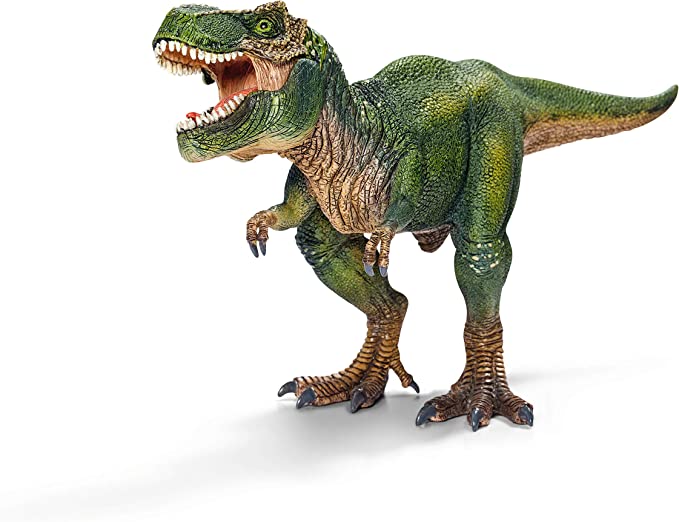
| Period | Location | Height | Length | Speed | Distinctive Feature | Ferocious Score |
|---|---|---|---|---|---|---|
| Late Cretaceous (~68-66 million years ago) | North America | Up to 20 feet | Up to 40 feet | Up to 20 mph | Large skull and powerful jaw | 10/10 |
Tyrannosaurus Rex, whose name translates to ‘Tyrant Lizard King,’ was truly a ruler of its time. This fearsome predator is often portrayed as the ultimate dinosaur, with a reputation that has been fueled by movies and popular culture. With its colossal size and bone-crushing jaws, T-Rex was a terror on two legs. Fossil evidence shows that this massive carnivore primarily fed on large herbivorous dinosaurs, including Triceratops and Edmontosaurus. Despite its bulky size, T-Rex was likely a formidable hunter that could outrun any human.
2. Spinosaurus
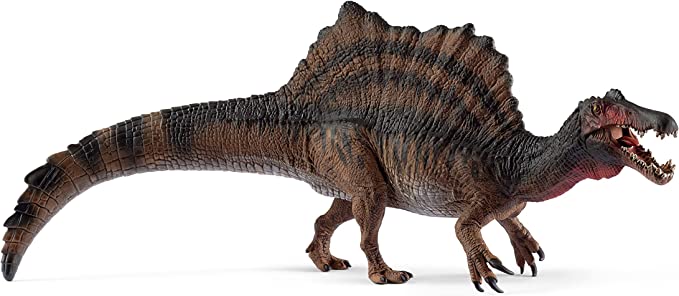
| Period | Location | Height | Length | Speed | Distinctive Feature | Ferocious Score |
|---|---|---|---|---|---|---|
| Early to Late Cretaceous (~112-93 million years ago) | North Africa | Up to 23 feet | Up to 59 feet | Up to 15 mph | Long, narrow skull and sail-like spines | 9/10 |
The Spinosaurus, meaning ‘spine lizard,’ was an unusual dinosaur. It is currently considered the largest carnivorous dinosaur, even larger than T-Rex. This colossal creature sported a distinctive sail on its back, which was likely used for display, thermoregulation, or a combination of both. With its elongated, crocodile-like skull, Spinosaurus mainly fed on fish, making it the first known semi-aquatic dinosaur. This enormous predator not only ruled the land but also mastered the rivers of its time.
3. Giganotosaurus
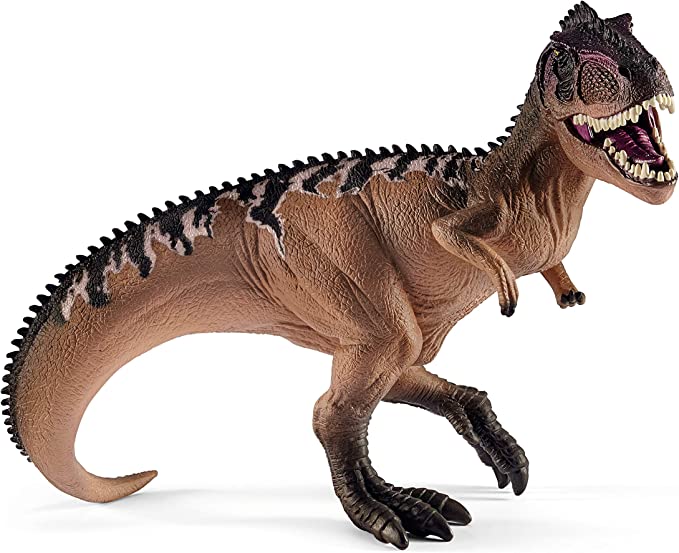
| Period | Location | Height | Length | Speed | Distinctive Feature | Ferocious Score |
|---|---|---|---|---|---|---|
| Late Cretaceous (~99.6-96 million years ago) | South America | Up to 14 feet | Up to 43 feet | Up to 31 mph | Huge skull and serrated teeth | 9/10 |
The Giganotosaurus, or ‘giant southern lizard,’ was one of the largest known terrestrial carnivores. Its name reflects its massive size, and it was equipped with a large skull filled with razor-sharp, serrated teeth, perfect for slicing through flesh. It is thought to have been a pack hunter, using teamwork to take down larger prey such as the enormous herbivorous Argentinosaurus. The Giganotosaurus was not only a fierce predator but also a sophisticated one, revealing the complex dynamics of the dinosaurian world.
4. Carcharodontosaurus
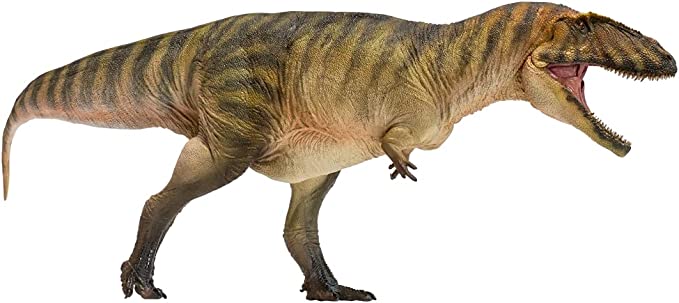
| Period | Location | Height | Length | Speed | Distinctive Feature | Ferocious Score |
|---|---|---|---|---|---|---|
| Late Cretaceous (~100-94 million years ago) | Africa | Up to 14 feet | Up to 44 feet | Up to 20 mph | Sharp, serrated teeth | 9/10 |
Carcharodontosaurus, or ‘shark-toothed lizard,’ earns its name from its long, razor-sharp teeth, similar to those of great white sharks. Its enormous skull housed a brain optimized for hunting, with sharp eyesight and a keen sense of smell. This colossal predator was likely at the top of the food chain, preying on large herbivorous dinosaurs.
5. Mapusaurus
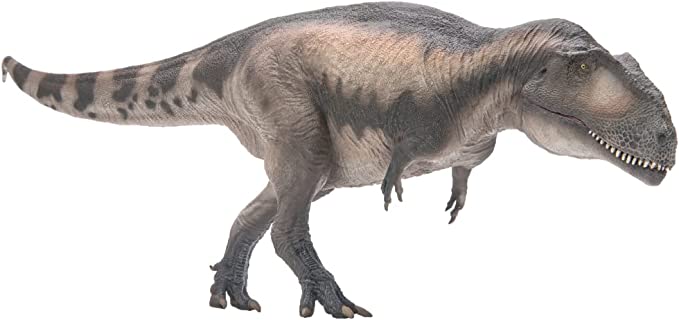
| Period | Location | Height | Length | Speed | Distinctive Feature | Ferocious Score |
|---|---|---|---|---|---|---|
| Late Cretaceous (~98-93 million years ago) | South America | Up to 13 feet | Up to 33 feet | Up to 30 mph | Likely hunted in packs | 8/10 |
Mapusaurus was a close relative of Giganotosaurus and shared many similarities in terms of size and hunting tactics. Evidence suggests that Mapusaurus may have been a social animal, hunting in packs to take down large prey such as Argentinosaurus, a testament to their strategic hunting prowess.
6. Allosaurus

| Period | Location | Height | Length | Speed | Distinctive Feature | Ferocious Score |
|---|---|---|---|---|---|---|
| Late Jurassic (~155-145 million years ago) | North America, Europe, Africa | Up to 16 feet | Up to 39 feet | Up to 21 mph | Three-fingered hands with sharp claws | 8/10 |
Allosaurus, known as ‘different lizard,’ was one of the earliest giant carnivores and is among the most common theropod fossils found. With its large, curved, and serrated teeth, Allosaurus was a versatile hunter capable of taking down a variety of prey.
7. Acrocanthosaurus
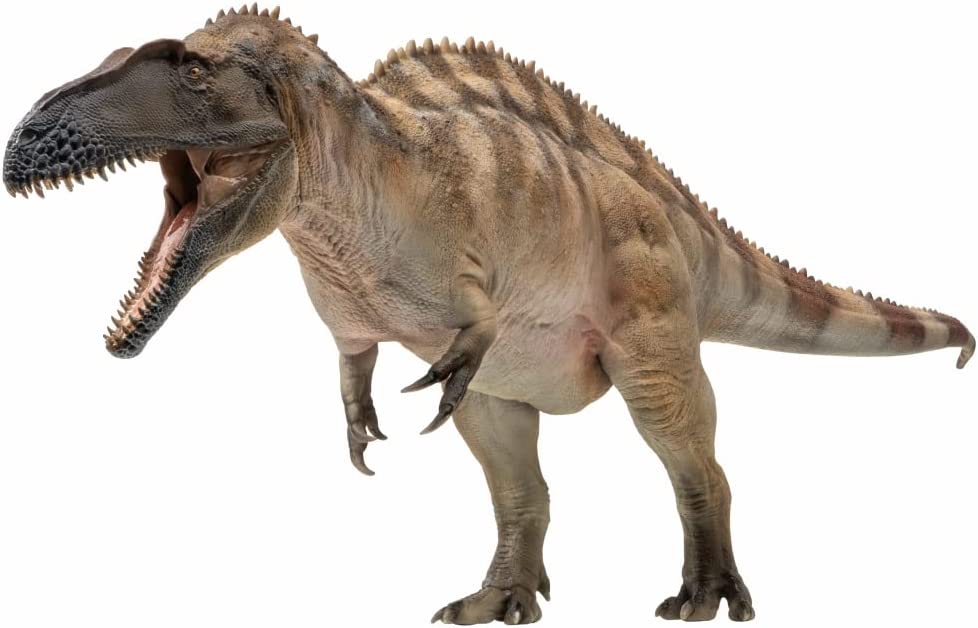
| Period | Location | Height | Length | Speed | Distinctive Feature | Ferocious Score |
|---|---|---|---|---|---|---|
| Early to Late Cretaceous (~125-100 million years ago) | North America | Up to 12 feet | Up to 38 feet | Up to 20 mph | High neural spines forming a ridge along its back | 8/10 |
Acrocanthosaurus, or ‘high-spined lizard,’ had a row of tall spines running down its back, which probably supported a hump or ridge of flesh. This formidable predator was one of the largest theropods, with a skull equipped with powerful, sharp teeth.
8. Carnotaurus
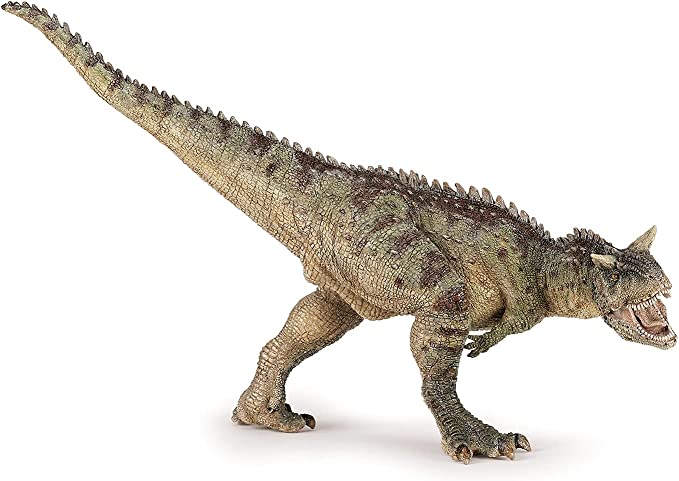
| Period | Location | Height | Length | Speed | Distinctive Feature | Ferocious Score |
|---|---|---|---|---|---|---|
| Late Cretaceous (~72-69.9 million years ago) | South America | Up to 10 feet | Up to 25 feet | Up to 35 mph | Bull-like horns above the eyes | 7/10 |
Carnotaurus, or ‘meat-eating bull,’ was a unique dinosaur characterized by its distinctive horns above its eyes, which were likely used in combat with other Carnotaurus. It had exceptionally long legs for a theropod and might have been one of the fastest large predators.
9. Albertosaurus
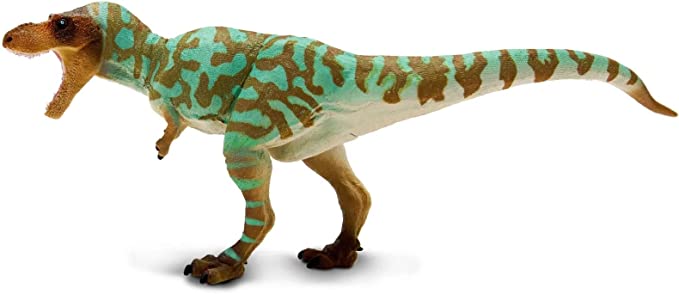
| Period | Location | Height | Length | Speed | Distinctive Feature | Ferocious Score |
|---|---|---|---|---|---|---|
| Late Cretaceous (~70 million years ago) | North America | Up to 11 feet | Up to 30 feet | Up to 28 mph | Smaller, sleeker version of T-Rex | 7/10 |
Albertosaurus was a smaller relative of the infamous T-Rex, but don’t let its smaller size fool you. This dinosaur was a fast and ferocious hunter, with evidence suggesting that it might have hunted in packs, a rarity among large theropods.
10. Megalosaurus

| Period | Location | Height | Length | Speed | Distinctive Feature | Ferocious Score |
|---|---|---|---|---|---|---|
| Middle Jurassic (~166 million years ago) | Europe | Up to 10 feet | Up to 30 feet | Up to 20 mph | One of the first scientifically described dinosaurs | 7/10 |
Megalosaurus, meaning ‘great lizard,’ holds a special place in the history of paleontology. It was one of the first dinosaurs to be scientifically described, marking a significant point in our understanding of these prehistoric creatures. Despite being overshadowed by larger theropods in popular culture, Megalosaurus was a formidable predator in its own right. With its strong jaws and sharp teeth, it was likely at the top of the food chain in its environment, preying on large herbivorous dinosaurs and possibly even smaller members of its own species. The discovery and study of Megalosaurus played a key role in the eventual recognition that dinosaurs were a distinct group of reptiles.
From razor-sharp teeth to pack hunting strategies, these titans represent the pinnacle of carnivorous dinosaur evolution, exhibiting a diversity of forms and hunting strategies that enabled them to dominate their respective ecosystems.
These awe-inspiring creatures, the largest carnivorous dinosaurs that ever lived, were not merely mindless monsters but rather highly evolved hunters. Each species was unique in their size, hunting strategies, and physical characteristics, tailored to their specific environments and prey. From the T-Rex, the ‘tyrant king’ with its colossal size and bone-crushing jaws, to the Spinosaurus, the semi-aquatic giant with a distinct sail-like spine, these carnivorous dinosaurs ruled the Mesozoic era with unmatched ferocity.
But perhaps the most fascinating aspect of these formidable predators is not their sheer size or strength, but rather the complexity of their behavior, their adaptation to their environments, and their impact on the ecosystem. They remind us of the ever-changing nature of life on Earth and the evolutionary forces that shape species.

 Prehistoric Playtime
Leave a comment